Research & Evidence

Dr. Mulvaney has published more original SGB research than any other scientist globally — across JAMA Psychiatry, Military Medicine, Brain Sciences, and other peer-reviewed journals.

18+
Published Studies
JAMA Psychiatry
Including landmark RCT
85%+
Published success rate
2025
Most recent publications

Recent Publications (2024–2025)

New

Dr. Mulvaney's latest peer-reviewed work — including an Ohio State University randomized controlled trial and new durability data across PTSD, anxiety, and TBI.

RCTPTSDOhio State University RCT — co-authored by Dr. Mulvaney
2025

Effectiveness of Combined Cognitive Processing Therapy with Stellate Ganglion Block: An Open-Label Randomized Wait-List Clinical Trial

Psychotherapy and Psychosomatics

N=86 military personnel and veterans. SGB before CPT produced faster PTSD symptom reduction. Non-responders to CPT achieved significant PCL-5 improvement after receiving SGB — establishing SGB as a powerful augmentation to first-line therapy.

  • 86 military personnel and veterans randomized to SGB-before-CPT vs. SGB-after-CPT
  • Both groups showed significant PCL-5 reduction from baseline (p < 0.001)
  • SGB-before-CPT group achieved faster symptom relief
  • CPT non-responders at week 8 showed significant PCL-5 improvement after receiving SGB at week 12
  • Supports SGB as an augmentation to evidence-based psychotherapy, not a replacement
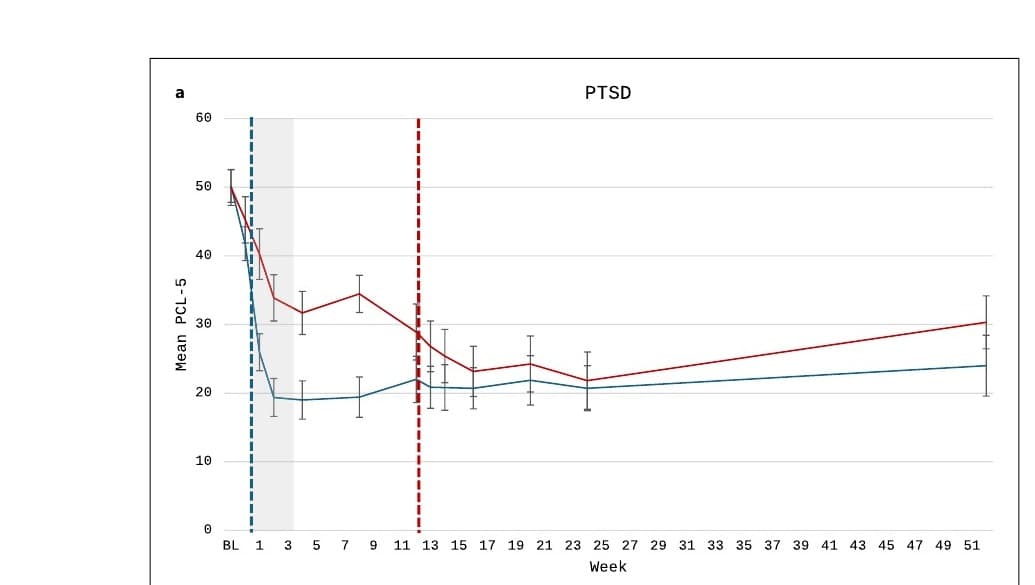
Fig. 2a — Mean PCL-5 scores over 52 weeks. Blue: SGB-before-CPT group. Red: SGB-after-CPT group. Blue dashed line = SGB timing; gray shading = massed CPT; red dashed line = crossover SGB for control group. Both groups converge by week 13, but SGB-before-CPT achieves faster initial reduction.

Fig. 2a — Mean PCL-5 scores over 52 weeks. Blue: SGB-before-CPT group. Red: SGB-after-CPT group. Blue dashed line = SGB timing; gray shading = massed CPT; red dashed line = crossover SGB for control group. Both groups converge by week 13, but SGB-before-CPT achieves faster initial reduction.

Case ReportPTSD
2025

Reversible Increased Anxiety Following Left-Sided Stellate Ganglion Block to Treat Posttraumatic Stress Disorder: A Case Report

Military Medicine

Rare safety finding: in two patients, left-sided SGB temporarily worsened anxiety after prior right-sided benefit. Subsequent right-sided SGB fully resolved worsening and improved symptoms beyond original baseline.

  • Two patients experienced acute anxiety worsening after left-sided SGB following successful right-sided SGB
  • Worsening was fully reversible in both cases
  • Subsequent right-sided SGB resolved symptoms and improved beyond pre-treatment baseline
  • Estimated incidence: rare — mechanism unknown
  • Clinical implication: if left-sided SGB worsens symptoms, repeat right-sided SGB is the rescue intervention
Case SeriesPTSD
2025

Long-Term Durability of Bilateral Two-Level Stellate Ganglion Blocks in Posttraumatic Stress Disorder: A Six-Month Retrospective Analysis

Clinical and Translational Neuroscience

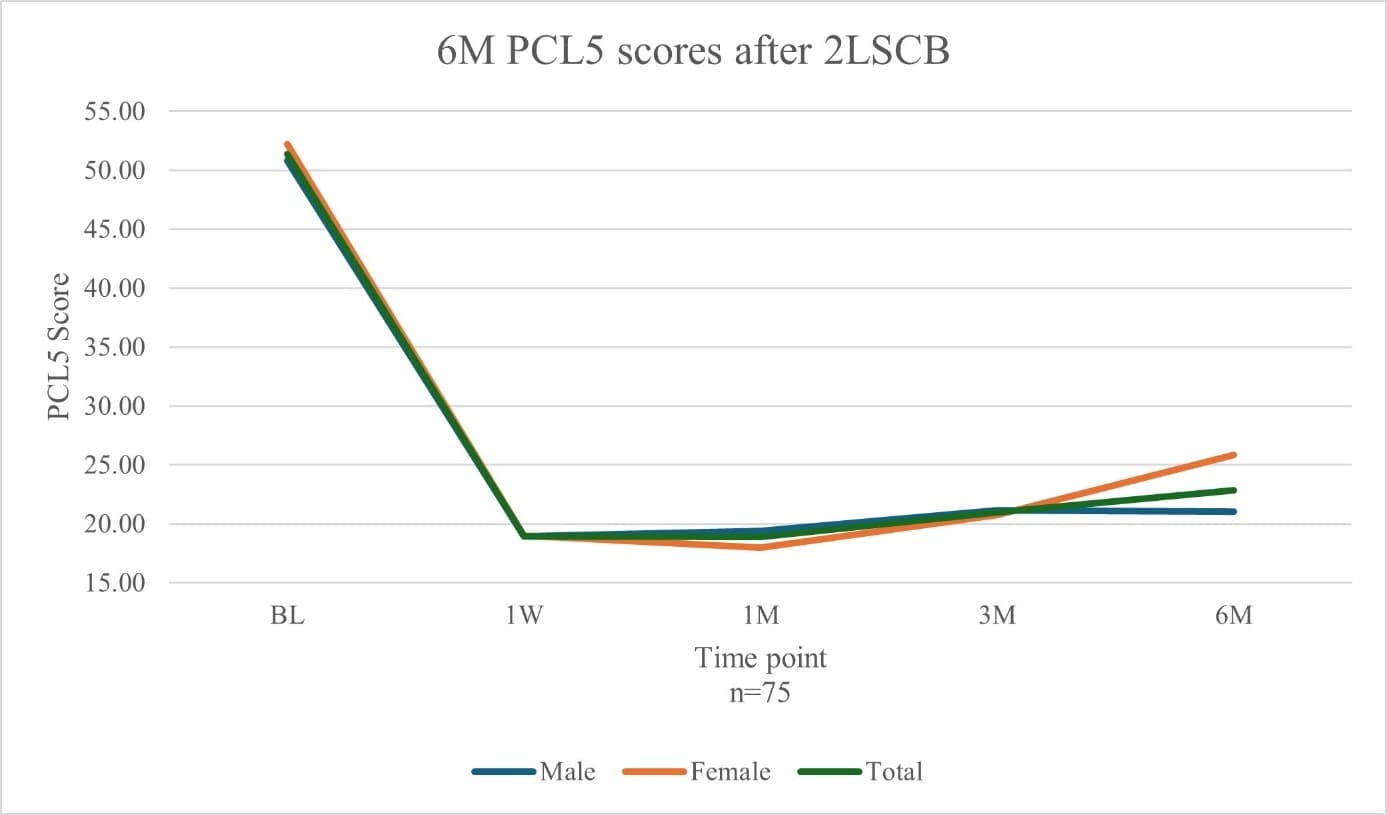
75 patients — 96% (72/75) showed PCL-5 improvement at 6 months, with an average 55.48% reduction from baseline. The first study to establish 6-month durable PTSD symptom relief following bilateral two-level SGB.

  • 75 patients analyzed at 1 week, 1 month, 3 months, and 6 months post-bilateral SGB
  • 96% (72/75) showed PCL-5 improvement at 6-month follow-up
  • Average 55.48% reduction in PCL-5 scores from baseline to 6 months
  • Results stratified by trauma type: public service/childhood abuse patients responded earliest; sexual abuse trauma patients showed greatest gains at 6 months
  • First published study establishing 6-month durability for bilateral two-level SGB in PTSD
PCL-5 scores at baseline, 1 week, 1 month, 3 months, and 6 months post-bilateral 2-level SGB (n=75). Male, female, and total scores all show sustained improvement through 6 months, with scores remaining well below the clinical PTSD threshold.

PCL-5 scores at baseline, 1 week, 1 month, 3 months, and 6 months post-bilateral 2-level SGB (n=75). Male, female, and total scores all show sustained improvement through 6 months, with scores remaining well below the clinical PTSD threshold.

Case SeriesAnxiety
2025

Three-Month Durability of Bilateral Two-Level Stellate Ganglion Blocks in Patients with Generalized Anxiety Disorder: A Retrospective Analysis

Brain Sciences

86.8% of 114 GAD patients improved. Average GAD-7 dropped 52% (15.5 → 7.3) and held at 3 months across all initial severity levels.

  • 114 patients (71 male, 43 female) with generalized anxiety disorder
  • 99 of 114 patients (86.8%) achieved lasting improvement
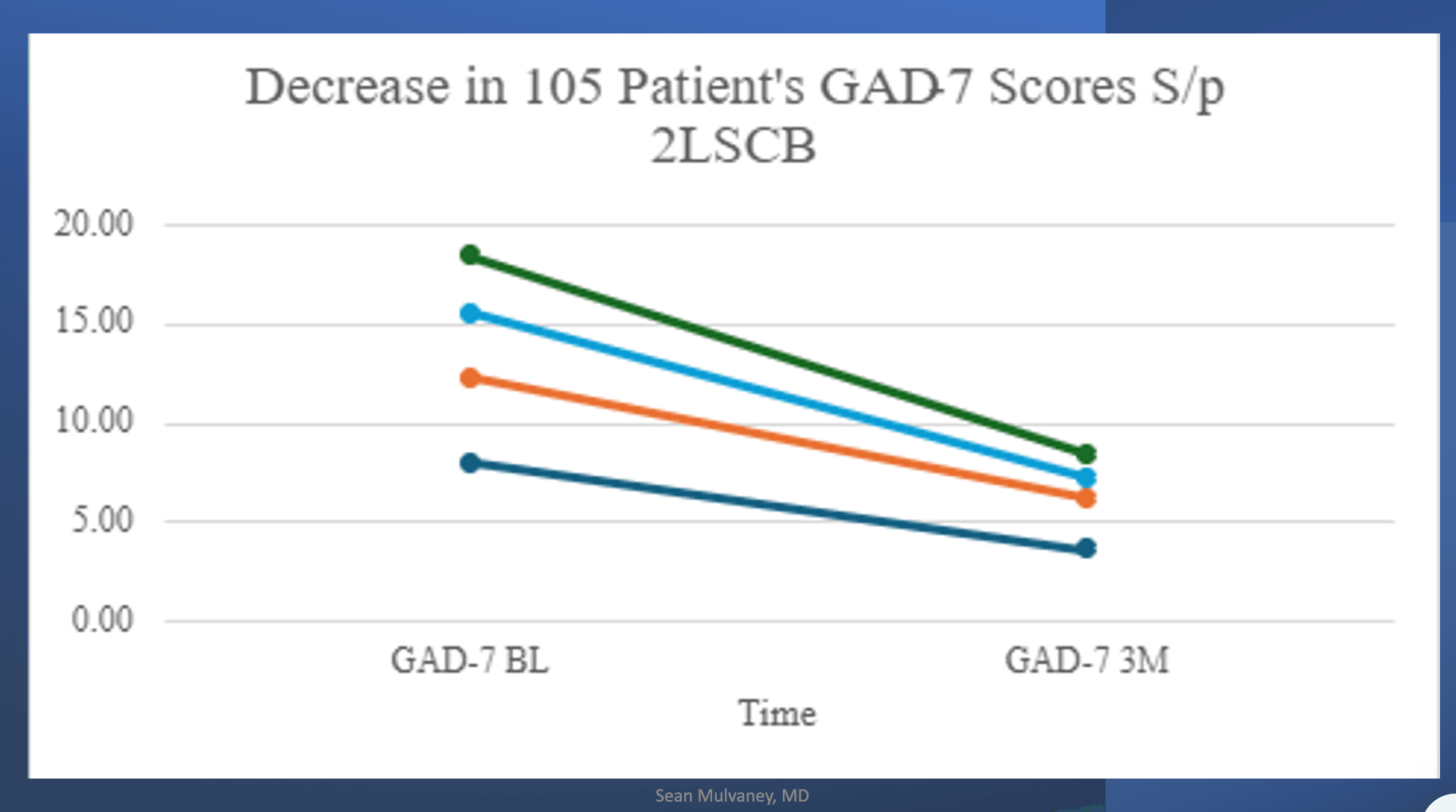
  • Baseline GAD-7: 15.52 → 3-month follow-up: 7.28 (52% average improvement)
  • Benefit sustained regardless of initial anxiety severity
  • First study to establish 3-month durability for GAD specifically
Decrease in 105 patients' GAD-7 scores following bilateral two-level stellate ganglion block (2LSCB). All severity subgroups showed meaningful reduction from baseline to 3-month follow-up.

Decrease in 105 patients' GAD-7 scores following bilateral two-level stellate ganglion block (2LSCB). All severity subgroups showed meaningful reduction from baseline to 3-month follow-up.

Case SeriesTBI
2025

Three-Month Durability of Bilateral Two-Level Stellate Ganglion Blocks for Traumatic Brain Injury: A Retrospective Analysis

Biomedicines

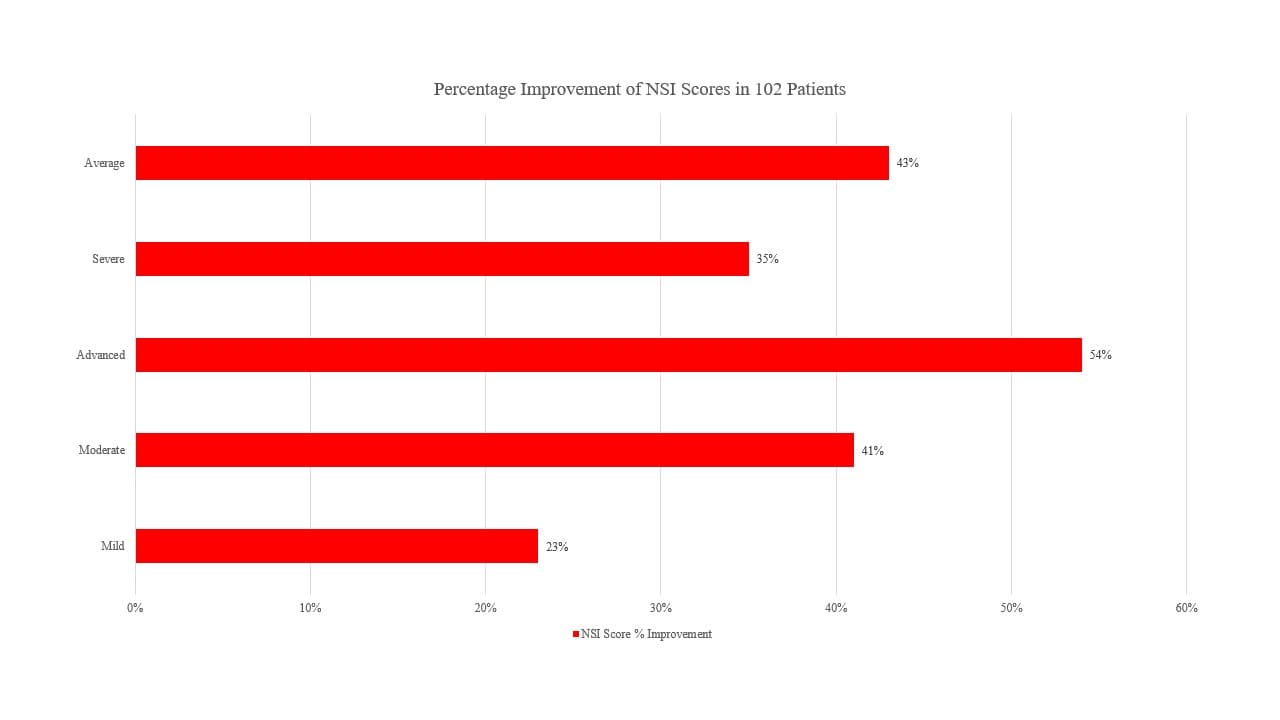
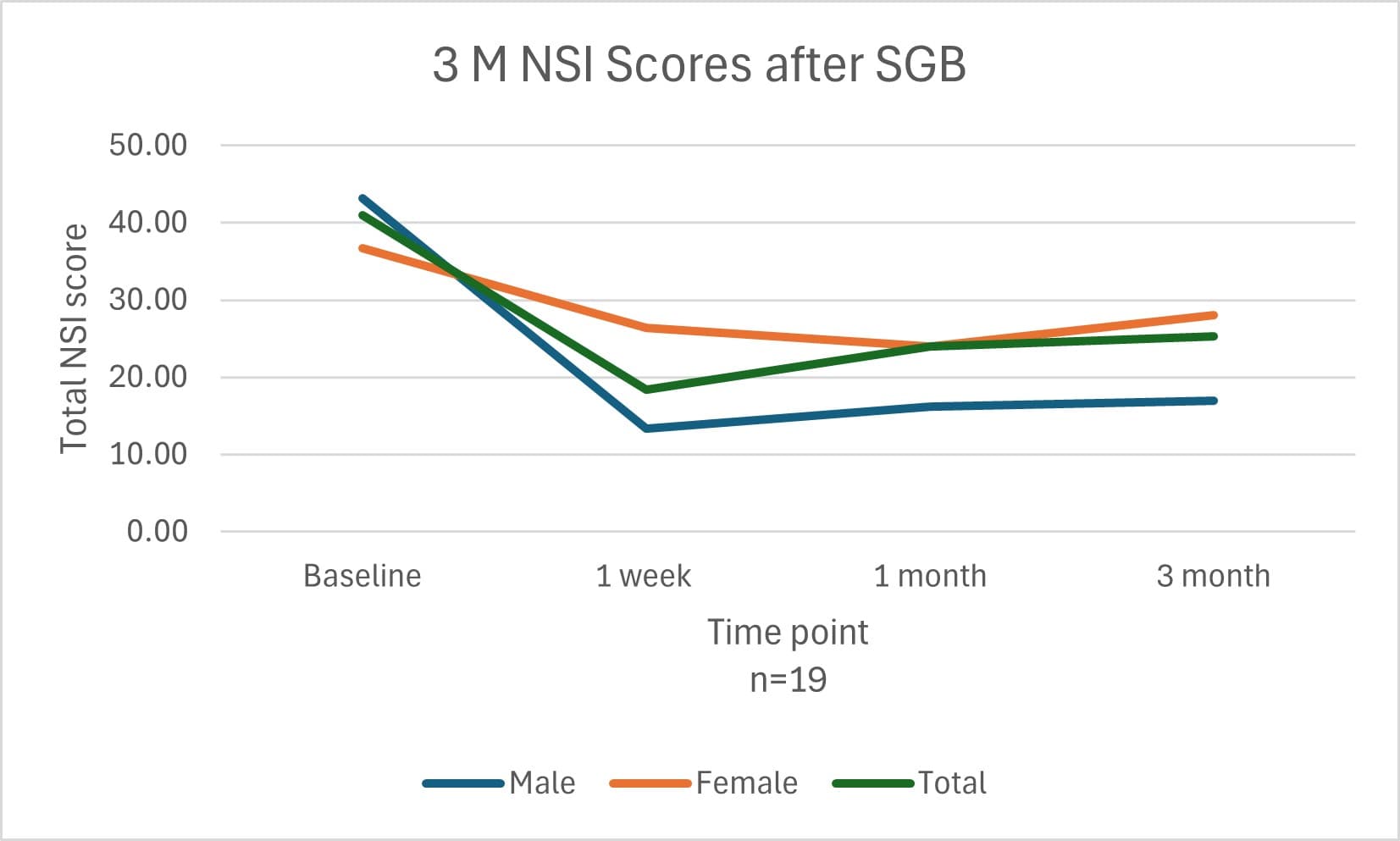
85.4% of 41 TBI patients improved, with an average 48.4% decrease in NSI scores sustained at 3 months. No significant difference in outcomes between male and female patients.

  • 41 patients (28 male, 13 female) with chronic mild TBI
  • 35 of 41 patients (85.4%) showed NSI score improvement
  • Average 48.4% decrease in total NSI scores from baseline
  • Effects durable at 3-month follow-up
  • No significant sex differences in treatment response
Total NSI scores at baseline, 1 week, 1 month, and 3 months post-SGB (n=19 with complete follow-up). All three groups — male, female, and total — show sustained improvement.

Total NSI scores at baseline, 1 week, 1 month, and 3 months post-SGB (n=19 with complete follow-up). All three groups — male, female, and total — show sustained improvement.

Case SeriesTBI
2024

The Effect of Bilateral, Two-Level Cervical Sympathetic Chain Blocks on Specific Symptom Clusters for Traumatic Brain Injury, Independent of Concomitant PTSD Symptoms

Brain Sciences

All 20 patients showed ~50% improvement in pure TBI symptoms (isolated from PTSD overlap) at 1 week and 1 month — confirming SGB benefits TBI independently of any PTSD effect.

  • 20 patients analyzed using a novel NSI sub-score excluding PTSD/anxiety-overlapping items
  • TBI-specific sub-score: baseline 15.45 → week 1: 8.30 → month 1: 7.80 (~50% improvement)
  • All 20 patients demonstrated improvement
  • First study isolating TBI-specific SGB benefit independent of PTSD symptom improvement
  • Supports SGB for TBI patients regardless of PTSD comorbidity

PTSD Studies

From the pioneering 2010 case series through the landmark JAMA Psychiatry RCT and 2025 six-month durability data.

RCTPTSDOhio State University RCT — co-authored by Dr. Mulvaney
2025

Effectiveness of Combined Cognitive Processing Therapy with Stellate Ganglion Block: An Open-Label Randomized Wait-List Clinical Trial

Psychotherapy and Psychosomatics

N=86 military personnel and veterans. SGB before CPT produced faster PTSD symptom reduction. Non-responders to CPT achieved significant PCL-5 improvement after receiving SGB — establishing SGB as a powerful augmentation to first-line therapy.

Fig. 2a — Mean PCL-5 scores over 52 weeks. Blue: SGB-before-CPT group. Red: SGB-after-CPT group. Blue dashed line = SGB timing; gray shading = massed CPT; red dashed line = crossover SGB for control group. Both groups converge by week 13, but SGB-before-CPT achieves faster initial reduction.

Fig. 2a — Mean PCL-5 scores over 52 weeks. Blue: SGB-before-CPT group. Red: SGB-after-CPT group. Blue dashed line = SGB timing; gray shading = massed CPT; red dashed line = crossover SGB for control group. Both groups converge by week 13, but SGB-before-CPT achieves faster initial reduction.

Case SeriesPTSD
2025

Long-Term Durability of Bilateral Two-Level Stellate Ganglion Blocks in Posttraumatic Stress Disorder: A Six-Month Retrospective Analysis

Clinical and Translational Neuroscience

75 patients — 96% (72/75) showed PCL-5 improvement at 6 months, with an average 55.48% reduction from baseline. The first study to establish 6-month durable PTSD symptom relief following bilateral two-level SGB.

PCL-5 scores at baseline, 1 week, 1 month, 3 months, and 6 months post-bilateral 2-level SGB (n=75). Male, female, and total scores all show sustained improvement through 6 months, with scores remaining well below the clinical PTSD threshold.

PCL-5 scores at baseline, 1 week, 1 month, 3 months, and 6 months post-bilateral 2-level SGB (n=75). Male, female, and total scores all show sustained improvement through 6 months, with scores remaining well below the clinical PTSD threshold.

Case SeriesPTSD
2021

The Successful Use of Left-sided Stellate Ganglion Block in Patients That Fail to Respond to Right-sided Stellate Ganglion Block: A Retrospective Analysis of 205 Patients

Military Medicine

~1–5% of patients who fail right-sided SGB respond profoundly to left-sided treatment; ~20% see greater benefit from left-sided block.

Case ReportPTSD
2021

Behavioral Health Clinicians Endorse Stellate Ganglion Block as a Valuable Intervention in the Treatment of Trauma-Related Disorders

Journal of Investigative Medicine

Behavioral health clinicians who observed SGB outcomes endorsed it as a valuable treatment adjunct for trauma-related disorders.

Case SeriesPTSD
2020

Comparison of C6 Stellate Ganglion Block vs C6 and C4 Cervical Sympathetic Chain Block for Treatment of PTSD: Analysis of 147 Patients

Journal of Neurological Disorders & Stroke

First study demonstrating that two-level blocks (C6 + C4) may provide greater benefit than single-level C6 block alone.

RCTPTSD
2019

Effect of the Stellate Ganglion Block Treatment on Posttraumatic Stress Disorder Symptoms — A Randomized Clinical Trial

JAMA Psychiatry

Landmark RCT published in JAMA Psychiatry. SGB reduced PTSD symptoms at roughly twice the rate of placebo.

ReviewPTSD
2016

Stellate Ganglion Block in the Treatment of Post-traumatic Stress Disorder: A Review of Historical and Recent Literature

Pain Practice

Comprehensive literature review covering the historical development and clinical evidence base for SGB in PTSD.

Case SeriesPTSD
2015

Neurocognitive Performance is Not Degraded After Stellate Ganglion Block Treatment

Military Medicine

Demonstrated that SGB does not impair neurocognitive performance — addressing a key safety concern.

GuidelinesPTSD
2015

Clinical Guidelines for Stellate Ganglion Block to Treat Anxiety Associated With Posttraumatic Stress Disorder

Journal of Special Operations Medicine

Published clinical guidelines establishing standardized protocol for SGB in PTSD treatment.

Case SeriesPTSD
2015

Safety and Patient Acceptability of Stellate Ganglion Blockade as a Treatment Adjunct for Combat-Related PTSD: A Quality Assurance Initiative

Cureus

Confirmed safety profile and high patient acceptability of SGB as a treatment adjunct for combat-related PTSD.

Case SeriesPTSD
2014

Stellate Ganglion Block Used to Treat Symptoms Associated With Combat-Related Post-Traumatic Stress Disorder: A Case Series of 166 Patients

Military Medicine

Large early case series establishing SGB efficacy and safety for combat-related PTSI across 166 patients.

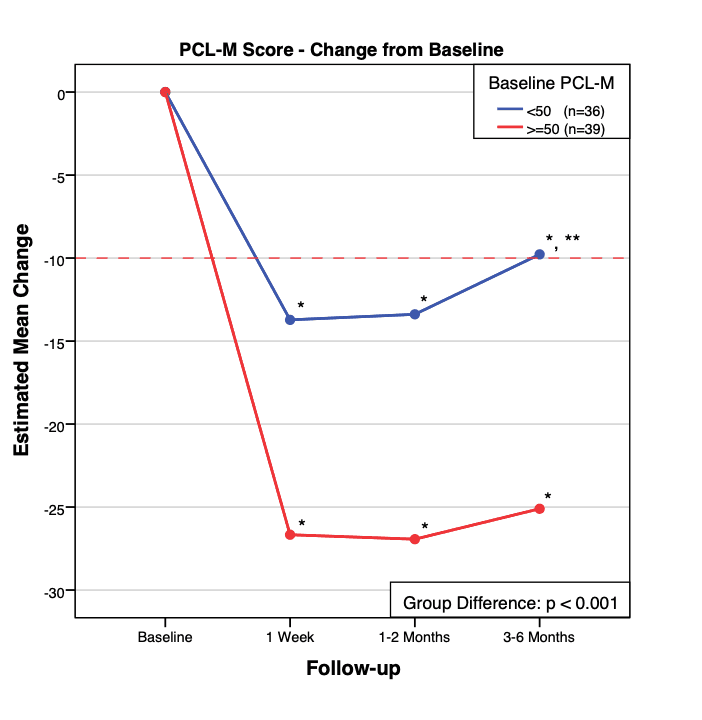
PCL-M Score — Change from Baseline. Patients with higher baseline PCL-M scores (≥50) showed greater symptom reduction, with group differences significant at p < 0.001.

PCL-M Score — Change from Baseline. Patients with higher baseline PCL-M scores (≥50) showed greater symptom reduction, with group differences significant at p < 0.001.

Case SeriesPTSD
2010

The Use of Stellate Ganglion Block in the Treatment of Panic/Anxiety Symptoms with Combat-Related PTSD; Preliminary Results of Long-Term Follow-Up: A Case Series

Pain Practice

Pioneering early study and long-term follow-up demonstrating durable SGB benefit for combat-related PTSI.
Anxiety Studies

Evidence for SGB in broader anxiety disorders beyond PTSD, including generalized anxiety disorder.

Case SeriesAnxiety
2025

Three-Month Durability of Bilateral Two-Level Stellate Ganglion Blocks in Patients with Generalized Anxiety Disorder: A Retrospective Analysis

Brain Sciences

86.8% of 114 GAD patients improved. Average GAD-7 dropped 52% (15.5 → 7.3) and held at 3 months across all initial severity levels.

  • 114 patients (71 male, 43 female) with generalized anxiety disorder
  • 99 of 114 patients (86.8%) achieved lasting improvement
  • Baseline GAD-7: 15.52 → 3-month follow-up: 7.28 (52% average improvement)
  • Benefit sustained regardless of initial anxiety severity
  • First study to establish 3-month durability for GAD specifically
Decrease in 105 patients' GAD-7 scores following bilateral two-level stellate ganglion block (2LSCB). All severity subgroups showed meaningful reduction from baseline to 3-month follow-up.

Decrease in 105 patients' GAD-7 scores following bilateral two-level stellate ganglion block (2LSCB). All severity subgroups showed meaningful reduction from baseline to 3-month follow-up.

Case SeriesAnxiety
2023

Stellate Ganglion Block Reduces Anxiety Symptoms by Half: A Case Series of 285 Patients

Journal of Personalized Medicine

50% reduction in anxiety scores across 285 patients — exceeding twice the clinically important threshold. Bilateral blocks outperformed unilateral.

Traumatic Brain Injury Studies

Three published studies establishing bilateral two-level SGB as a durable treatment for TBI symptoms, independent of PTSD comorbidity.

Case SeriesTBI
2025

Three-Month Durability of Bilateral Two-Level Stellate Ganglion Blocks for Traumatic Brain Injury: A Retrospective Analysis

Biomedicines

85.4% of 41 TBI patients improved, with an average 48.4% decrease in NSI scores sustained at 3 months. No significant difference in outcomes between male and female patients.

Total NSI scores at baseline, 1 week, 1 month, and 3 months post-SGB (n=19 with complete follow-up). All three groups — male, female, and total — show sustained improvement.

Total NSI scores at baseline, 1 week, 1 month, and 3 months post-SGB (n=19 with complete follow-up). All three groups — male, female, and total — show sustained improvement.

Case SeriesTBI
2024

The Effect of Bilateral, Two-Level Cervical Sympathetic Chain Blocks on Specific Symptom Clusters for Traumatic Brain Injury, Independent of Concomitant PTSD Symptoms

Brain Sciences

All 20 patients showed ~50% improvement in pure TBI symptoms (isolated from PTSD overlap) at 1 week and 1 month — confirming SGB benefits TBI independently of any PTSD effect.

Case SeriesTBI
2024

The Successful Use of Bilateral 2-Level Ultrasound-Guided Stellate Ganglion Block to Improve Traumatic Brain Injury Symptoms: A Retrospective Analysis of 23 Patients

Military Medicine

53% improvement in NSI scores at 1 week (42.7 → 18.8). 22 of 23 patients demonstrated symptom reduction with bilateral two-level blocks at C6 and C4.

Long COVID Studies

Emerging evidence that SGB can relieve persistent post-viral symptoms by resetting the sympathetic hyperactivity associated with long COVID.

ReviewLong COVID
2026

Stellate Ganglion Block in the Treatment of Long COVID: A Systematic Review

Current Pain and Headache Reports

Systematic review of 7 studies. Symptom improvement rates ranged from 55.8% to 100%. Most robust improvements (>80%) seen in cough, dyspnea, headache, joint pain, and paresthesias. Confirms SGB as a promising intervention warranting controlled trials.

  • Searched EMBase and PubMed through August 2025 — 45 results, 7 studies met inclusion criteria
  • Symptom improvement rates across all 7 studies: 55.8% to 100%
  • Most robust improvements (>80%): cough, dyspnea, headache, joint pain, pain intensity, paresthesias
  • Highly responsive symptom categories: autonomic dysfunction (76.7%), brain fog (71.6%), fatigue (69.8%), sleep disruption (72.2%), dizziness (70%), anxiety (68.8%), mood/depression (69.2%)
  • Authors characterize SGB as 'promising' and call for standardized controlled trials with larger cohorts
Case SeriesLong COVIDChiang et al., Harvard/Brigham & Women's Hospital
2025

Stellate Ganglion Block for the Management of Long COVID Symptoms: A Retrospective Cohort Study

Cureus

Multi-center study (Harvard/Brigham & Women's, UVA, Allegheny) — 52 patients, average 3 SGB injections. 55.8% reported short-term improvement. Most responsive: brain fog, fatigue, dizziness, headache.

  • 52 patients across 3 Boston-area pain centers (Sept 2022–Sept 2024); mean symptom duration 2.6 years
  • Average 3 SGB injections per patient; ultrasound-guided cervical sympathetic chain block
  • 55.8% reported at least short-term symptom improvement
  • Most responsive symptoms: brain fog, fatigue, dizziness, headache (median 3–4.5 point improvement on severity scale)
  • Post-exertional malaise showed minimal improvement
  • Authors conclude SGB 'reduced the severity of many PASC symptoms' and call for randomized controlled trials
Case SeriesLong COVIDPearson L et al., 2023
2023

Stellate Ganglion Block Relieves Long COVID-19 Symptoms in 86% of Patients: A Retrospective Cohort Study

Published September 2023

86% of 41 long COVID patients (symptoms 3–29 months) experienced symptom relief after unilateral or bilateral SGB. Brain fog (79%), fatigue (77%), and joint/muscle pain (94%) showed among the highest relief rates.

  • 41-patient cohort study — 18 male / 23 female, age 18–89, symptoms lasting 3–29 months
  • Unilateral or bilateral SGB used depending on symptom severity
  • Mechanism: SGB resets marked sympathetic hyperactivity observed during and after COVID-19 infection
  • Symptom Relief Rates
  • Brain fog: 79% (80% of patients affected)
  • Fatigue: 77% (85% of patients affected)
  • Post-exertional malaise: 74% (66% of patients affected)
  • Joint and muscle pain: 94% (39% of patients affected)
  • Shortness of breath: 88% (41% of patients affected)
  • Dizziness: 77% (41% of patients affected)
  • Mood changes: 76% (39% of patients affected)
  • Tachycardia or palpitations: 78% (22% of patients affected)
  • Pins and needles sensation: 100% (22% of patients affected)
  • Sleep issues: 71% (34% of patients affected)
  • Diarrhea: 88% (20% of patients affected)
  • Cough: 80% (24% of patients affected)
  • Chest pain: 80% (24% of patients affected)
  • Change in taste or smell: 40% (44% of patients affected)
  • Rash: 100% (5% of patients affected)

Questions About the Evidence?

Dr. Mulvaney is available to discuss the research with referring physicians and prospective patients.